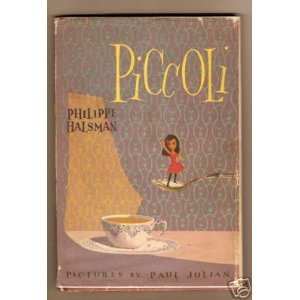
35 Published BooksPhilippe Halsman
(Latvian: Filips Halsmans, German: Philipp Halsmann)
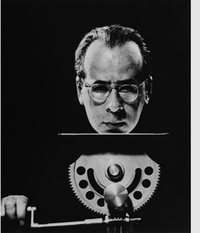
Philippe Halsman was an American portrait photographer. He was born in Riga in the part of the Russian Empire which later became Latvia, and died in New York City.
In September 1928, 22-year-old Halsman was accused of his father's murder while they were on a hiking trip in the Austrian Tyrol, an area rife with antisemitism. Despite his protested innocence, endorsed by many important European intellectuals including Sigmund Freud, Albert Einstein, Thomas Mann, Jakob Wassermann, Erich Fromm, Paul Painlevé, Heinrich Eduard Jacob, and Rudolf Olden, Halsman spent two years in prison, contracting tuberculosis there. His letters from prison were published as a book in 1930: Briefe aus der Haft an eine Freundin. He was pardoned by the President of Austria, Wilhelm Miklas, and released in October 1930.
Halsman began to take photographs in Paris in the 1930s. He opened a portrait studio in Montparnasse in 1934, where he photographed André Gide, Marc Chagall, André Malraux, Le Corbusier and other writers and artists, using an innovative twin-lens reflex camera that he had designed himself.
He arrived in the United States in 1940, just after the fall of France, having obtained an emergency visa, aided by family friend Albert Einstein (whom he later famously photographed in 1947).
In the course of his prolific career in America, Halsman produced reportage and covers for most major American magazines, including a staggering 101 covers for Life magazine. His assignments brought him face-to-face with many of the century’s leading personalities. In the early 1950s, Halsman began to ask his subjects to jump for his camera at the conclusion of each sitting. These uniquely witty and energetic images have become an important part of his photographic legacy.