2 Published BooksJoseph Lemasolai Lekuton
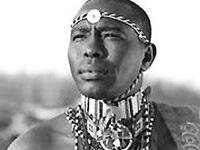
Joseph Lekuton was born in a cow-dung hut to a tribe of Maasai nomads in rural Kenya. In 2003 he graduated with a master's degree in educational policy from Harvard University. His exceptional journey between those two moments and beyond has allowed him to embrace—and bridge—both cultures.
When he was about six years old, Lekuton entered boarding school. During school vacations, he searched to locate his nomadic family. "They might be 8 kilometers [5 miles] away or 80 [50], I never knew." But thanks to those vacations, Lekuton's tribal life and school life were able to move on parallel paths. "I could be a dedicated student, but also herd cattle and go through traditional initiation ceremonies in my village, eventually becoming a full Maasai warrior."
After attending a preparatory school, Lekuton earned a scholarship to St. Lawrence University in New York, with his plane ticket paid for by a village-wide effort to sell the tribe's cows.
Following graduation, Lekuton spent more than ten years as a seventh- and eighth-grade social studies teacher in Virginia. During that time he earned his degree from Harvard, led groups of American students and families on trips to Kenya, organized humanitarian efforts there, and had his life story published by the National Geographic Society in the book Facing the Lion: Growing up Maasai on the African Savanna.
"To bridge cultures you must mix people together," he says. "Education and travel are the best teachers. That's why I began leading student trips to Kenya. I wanted to help open the eyes of American children and families, showing them firsthand how so many people in the rest of the world live. My American students are always surprised to see a culture where kids aren't surrounded by cell phones and TVs. They'll say, 'How do they entertain themselves?' I tell them that they entertain themselves by living life very simply. We'll visit my old primary school, where most students don't even have shoes. I'll point to one of them and say, 'That was me.' I want my groups to see that people who don't have much can still be very, very happy."
Despite cultural differences, Lekuton sees many links. "America was formed on the basis of hard work leading to success. So is Kenyan culture. If you're lazy and don't take your cows to the best grasslands and water, you'll lose all of them. Technology is making the world smaller too. If I can sit in the U.S. and instantly trade text messages with a friend from a small village in Kenya, how far apart can we really be?"
Lekuton has built other cross-cultural bridges to bring support to rural Kenya. In many areas, drinking water comes from the same contaminated ponds used by elephants and baboons. Lekuton mobilized friends in the U.S. to fund clean water systems for thousands of villagers, dramatically reducing deaths from waterborne diseases.
He has also spearheaded efforts to build schools, collect educational supplies, and inspire the creation of a Nomadic Children Scholarship Fund. "The more children we can educate, the fewer problems we'll have in Africa," he says. "Meeting enormous needs like this is my biggest challenge. I want to do so much, but there are never enough resources. So many students want to go to school but can't afford it. And in many places I see death staring at people because there's no food. Again, the resources simply aren't there."
On the other hand, he notes, "There are moments when I see a child's face light up as he thanks us for the education we've helped to provide. Or the elderly lady I remember who had a big smile because she's no longer carrying a heavy bucket of water on her back 15 kilometers [9 miles] every day. She told me I added 15 years to her lifespan by bringing clean water to her village."
Lekuton hopes the future will hold more opportunities for him to play a leadership role in Kenya. Equally comfortable in a Maasai red robe or a business suit, his passion for opening minds may open


