18 Published BooksDanielle S. Allen
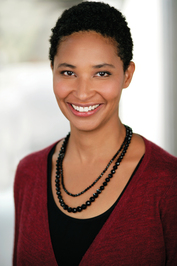
Danielle Allen, James Bryant Conant University Professor at Harvard University, and Director of Harvard’s Edmond J. Safra Center for Ethics, is a political theorist who has published broadly in democratic theory, political sociology, and the history of political thought. Widely known for her work on justice and citizenship in both ancient Athens and modern America, Allen is the author of The World of Prometheus: The Politics of Punishing in Democratic Athens (2000), Talking to Strangers: Anxieties of Citizenship since Brown vs. the Board of Education (2004), Why Plato Wrote (2010), Our Declaration: A Reading of the Declaration of Independence in Defense of Equality (2014), Education and Equality (2016), and Cuz: The Life and Times of Michael A. (2017). She is the co-editor of the award-winning Education, Justice, and Democracy (2013, with Rob Reich) and From Voice to Influence: Understanding Citizenship in the Digital Age (2015, with Jennifer Light). She is a former Chair of the Mellon Foundation Board, past Chair of the Pulitzer Prize Board, and a member of the American Academy of Arts and Sciences and the American Philosophical Society.
Dr. Allen received her undergraduate education in Classics at Princeton University, graduating summa cum laude. She was awarded an M.Phil. and Ph.D. in Classics from Cambridge University and went on to Harvard University, where she received her M.A. and Ph.D. in political science. She joined the faculty at the University of Chicago in 1997 as Assistant Professor of Classics. In 2000, Dr. Allen became Associate Professor of Classical Languages and Literatures, Political Science and the Committee on Social Thought. In 2003, she was promoted to Professor. The following year she was named Dean of the Division of Humanities, a role she was in until 2007.
Widely known for her work on justice and citizenship in ancient Athens and its application to modern America, Dr. Allen was awarded in 2002 a MacArthur Fellowship for her ability to combine "the classicist's careful attention to texts and language with the political theorist's sophisticated and informed engagement."